> For the complete documentation index, see [llms.txt](https://docs.dryad.app/dryad-documentation/llms.txt). Markdown versions of documentation pages are available by appending `.md` to page URLs; this page is available as [Markdown](https://docs.dryad.app/dryad-documentation/silvanet-deployment/deploy-sensors/device-ids.md).
# Register Wildfire Sensors
Before mounting the Wildfire Sensor, scan the Device ID using the Deployment app to register the Sensor and provide its GPS location with the Silvanet Cloud.
{% hint style="info" %}
**Device ID**
Each Silvanet Wildfire Sensor has its own unique **Device ID** (also referred to as Serial ID). It is provided as a unique text string as well as a QR Code printed on a label attached to the Sensor.
{% endhint %}
## Register Device ID
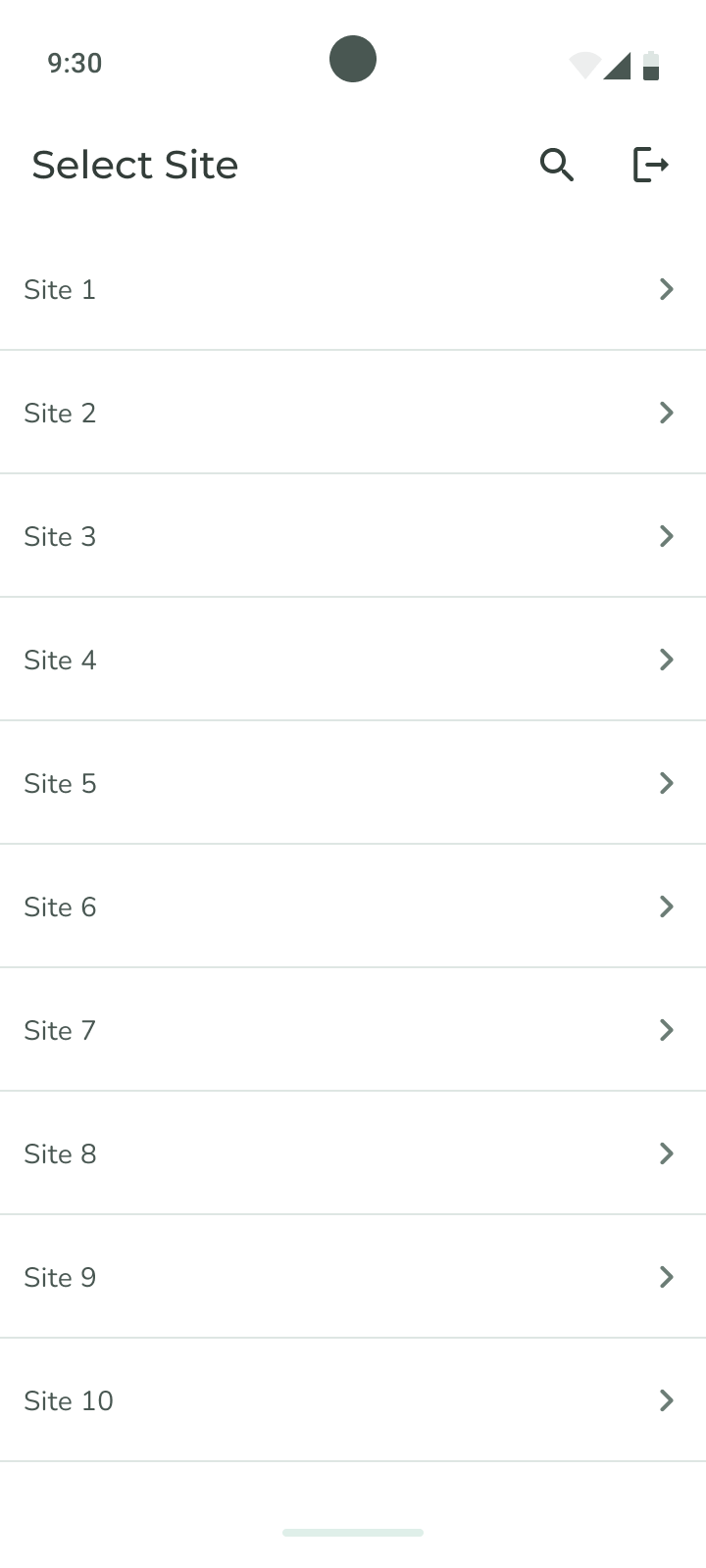
1. In the Silvanet Deployment app, tap a Site.
Select a Site
2. In the list of devices that appears, tap a Wildfire Sensor. Alternately, tap **Show Devices on Map**.
Select a device
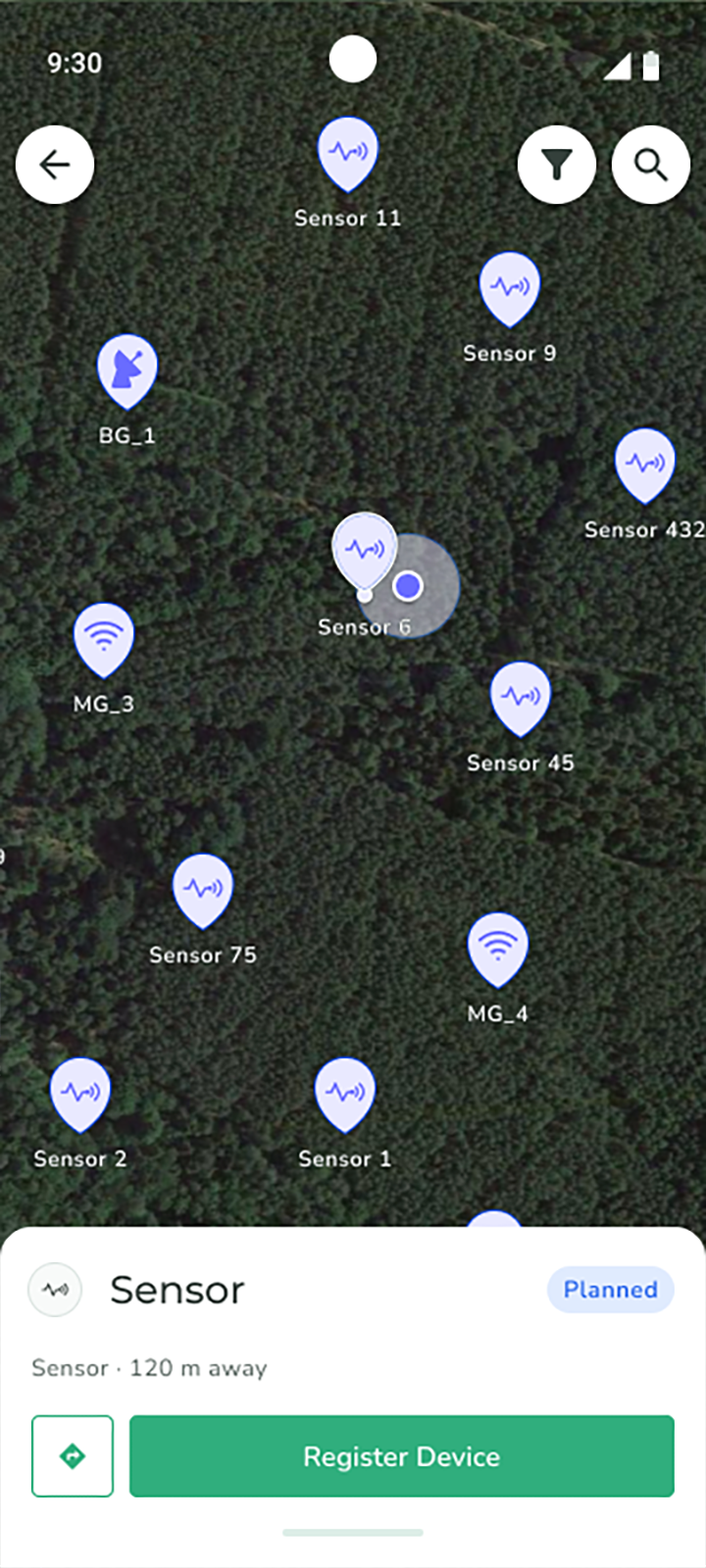
3. On the page that appears, tap **Register Device**. The blue dot on the map show your current location.
Tap Register Device
{% hint style="info" %}
**Finding the deployment location**
Note the Sensor is 120 m away from the user. Use this map to move towards the deployment location.
{% endhint %}
4. If you tapped **Show Devices on Map**, the map shows an overview of the Site on the map. Your location is indicated by a blue dot.
Map showing current location
5. Once the deployment location is found, scan the device's QR Code which is attached to the back of the Sensor. The Deployment app automatically fills in the Sensor's latitude and longitude using the Smartphone's GPS location.
Scan QR Code
5. The Deployment app automatically fills in the Sensor's latitude and longitude using the Smartphone's GPS location.
{% hint style="info" %}
**Entering Device ID (Serial ID) manually**
If the QR Code cannot be added, the information can be entered manually. Tap **Enter Serial ID Manually** to continue.
{% endhint %}
7. After successfully scanning the QR Code, the Deployment app shows a **Registration successful** screen. The device icon changes from **Planned** to **Deployed**. For more information, see [Status icons](/dryad-documentation/resources/status-icons.md#mesh-gateway-status-icons).
Registration successful
## Confirm mounting in Deployment app
1. After the **Registration successful** message appears in the Deployment app. Brief instructions are provided for mounting correctly the Wildfire Sensor.
Mounting instructions
2. Tap **Confirm**.
3. After you have correctly mounted the Wildfire Sensor (see [mounting instructions below](/dryad-documentation/silvanet-deployment/deploy-sensors/mount-wildfire-sensors.md#attach-sensors-using-treenails-long-term)) and is fully charged, an Installation successful message appears.
Installation successful
4. Dismiss the dialog by tapping **Close** or you can view the Device Details by tapping **Show Device Details**.
Device Details
{% hint style="info" %}
**See Also**
For details, see [Mount Wildfire Sensors](/dryad-documentation/silvanet-deployment/deploy-sensors/mount-wildfire-sensors.md).
{% endhint %}
---
# Agent Instructions
This documentation is published with GitBook. GitBook is the documentation platform designed so that both humans and AI agents can read, navigate, and reason over technical content effectively. Learn more at gitbook.com.
## Querying This Documentation
If you need additional information that is not directly available in this page, you can query the documentation by asking a question.
Perform an HTTP GET request on the following URL with the `ask` and `goal` query parameters:
```
GET https://docs.dryad.app/dryad-documentation/silvanet-deployment/deploy-sensors/device-ids.md?ask=&goal=
```
`ask` is the immediate question: it should be specific, self-contained, and written in natural language.
`goal` is what the user is ultimately trying to achieve, the reason they need the answer. Sharing it helps GitBook give you a better, more relevant answer. A goal is most helpful when it describes the outcome the user wants rather than restating the question. For example, with `ask=how do I create an API token`, a goal like `automate deployments from our CI pipeline` lets GitBook tailor the answer to that use case.
The response will contain a direct answer to the question and relevant excerpts and sources from the documentation.
Use this mechanism when the answer is not explicitly present in the current page, you need clarification or additional context, or you want to retrieve related documentation sections.